

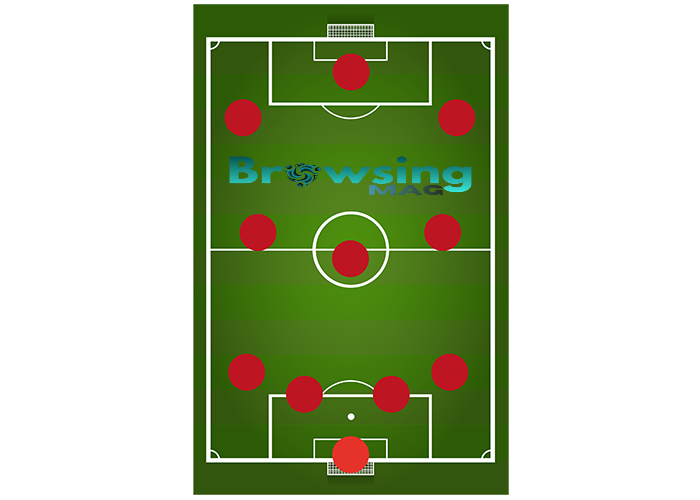
Aufstellungen, the German term for lineups or formations, represent the tactical backbone of every football match. While fans often focus on individual players, it is the structure, balance and strategy behind a team’s lineup that shapes how the game unfolds. Across modern football, Aufstellungen have transformed from rigid, predictable systems into highly flexible tactical frameworks that adapt in real time to match conditions, player roles and the opponent’s style of play.
Historical Evolution of Football Aufstellungen
The earliest forms of Aufstellungen were surprisingly attack-heavy. In the late nineteenth and early twentieth centuries, teams commonly used formations that placed as many as five players in the forward line. Defending was a collective effort, but attacking was the priority. Over time, as football became faster and more technical, managers began to favour balance between defence, midfield and attack.
By the mid-twentieth century, formations like the 4-4-2 dominated football culture. This structure allowed a stable defensive line, a compact midfield and a dual-striker partnership that defined several iconic eras. However, as coaches sought more midfield control and positional versatility, formations evolved into modern systems such as the 4-3-3, 4-2-3-1 and 3-4-3.
The Tactical Significance of Modern Aufstellungen
In contemporary football, Aufstellungen are far more than starting positions. A lineup now reflects a team’s philosophy, preparation for a specific opponent and long-term identity. Coaches design their formations to maximise strengths and disguise weaknesses.
A possession-based team may use a 4-3-3 to ensure width and fluid ball circulation, while a counter-attacking team might adopt a 4-4-2 or 5-3-2 to create defensive solidity before launching quick transitions. Tactical pressing systems also influence Aufstellungen, as modern football places great emphasis on recovering possession high up the pitch.
Player Roles and Positional Fluidity
What makes modern Aufstellungen especially fascinating is positional interchange. Traditional roles have blended into hybrid responsibilities. A full-back may become an inverted midfielder during build-up play. A winger may drift centrally to overload space between the lines. Even goalkeepers have evolved into ball-playing anchors, initiating attacks through precise distribution.
Lineups are no longer static diagrams but dynamic frameworks that shift depending on phases of play: defence, transition and attack. This fluidity demands exceptional understanding, athleticism and tactical intelligence from players.
Preparing Aufstellungen for Major Matches
Before each match, coaches analyse the opponent’s strengths, weaknesses and recent tactical trends. The Aufstellung becomes the final expression of this preparation. Coaches consider:
- The opponent’s pressing strategy
- Their defensive shape
- Key playmakers and threats
- The physical and mental condition of their own players
- Match venue and conditions
As a result, no two lineups are identical, even for the same team. Every Aufstellung is a blend of long-term philosophy and short-term strategy.
The Psychological Impact of Lineups
Aufstellungen influence not only tactics but morale. A strong lineup selection signals intent, while an unexpected change can inspire confidence or raise doubts. Players pay close attention to their roles, as positioning within the formation affects their responsibilities, involvement and influence on the game.
The Future of Aufstellungen
Looking ahead, Aufstellungen are likely to become even more fluid. With advances in data analysis, performance tracking and tactical modelling, football teams continue to refine their strategic approaches. Future lineups may incorporate more hybrid roles, deeper positional rotations and highly personalised tactical instructions.
Artificial intelligence and advanced analytics may one day assist coaches in generating optimal formations based on real-time data, making Aufstellungen even more precise and adaptive.
Conclusion
Aufstellungen remain a central pillar of football strategy, reflecting the sport’s continuous evolution. From early attacking-heavy formations to today’s complex and flexible systems, the concept of the lineup has grown into a sophisticated tactical science. As football continues to advance, Aufstellungen will remain a crucial tool for shaping the identity, performance and success of every team on the pitch.
